30 TikTok Shop Affiliate Video Ideas That Sell
Stuck staring at a product wondering what to film? These 30 ideas span every reliable format — from cold unboxing to GRWM — with a note on why each one converts and what to watch out for.
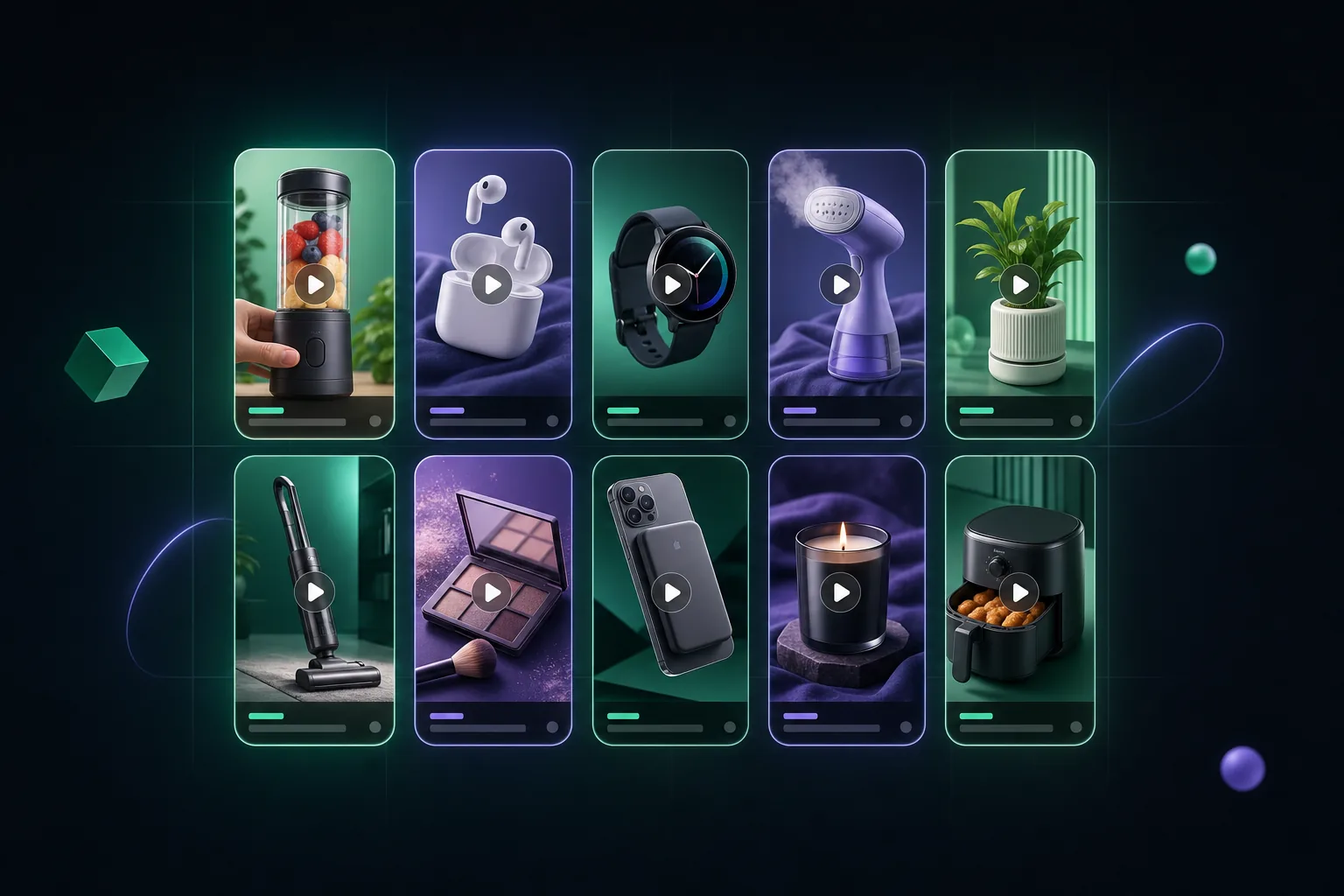
The most common question new TikTok Shop affiliates ask isn't "what product should I promote?" — it's "what should I actually film?" Product choice matters, but format is what determines whether your video stops the scroll and gets the tap. A great product filmed as a talking-head monologue will be ignored. The same product filmed as a crisp before-and-after can sell hundreds of units in a day.
These 30 ideas cover every format that consistently converts in 2026, organized into seven groups. Each idea gets a quick explanation of why it works and what to keep in mind when you execute it. If you're new to the process, start with our guide on how to make TikTok Shop affiliate videos before diving into format selection — the structural fundamentals apply to every idea on this list.
Group 1 — Unboxing & First Impressions (Ideas 1–5)
Unboxing videos work because the viewer gets to experience discovery alongside you. The key is authenticity — if it looks rehearsed, the magic evaporates. These five formats lean into genuine first-contact moments.
1. Cold Unboxing (Pure First-Reaction, No Script)
Hit record before you open the package and keep the camera rolling through your real, unfiltered reaction. The lack of polish is the point — viewers can tell when something is staged, and an authentic "oh, this is actually nice" beats a scripted take every time. Keep it under 45 seconds by trimming dead air in editing, but never trim the genuine reaction moments.
2. Packaging Comparison (This vs. What You Expected)
Open with a shot of the listing photo, then cut to what arrived in your hands. When the product exceeds expectations, this creates a satisfying reveal that drives comments and shares. When there's a meaningful discrepancy, your honest callout builds trust faster than any glowing review. Either way, viewers love being let in on the gap between what's advertised and what's real.
3. Smell / Texture / Feel Reaction (Beauty, Food, Candles)
Sensory products need a sensory presenter. Film your face reacting to the first smell of a candle, the texture of a serum, or the taste of a snack find. Your expression is the demo. This format works exceptionally well for beauty and food categories where the viewer genuinely cannot evaluate the product through a standard product photo.
4. "Is This Worth It?" Verdict Box
State the price in the first two seconds, then spend the video answering the question honestly. A structured verdict — what's good, what's not, and the bottom line — performs well because it positions you as a trusted curator rather than a promoter. Viewers save these videos for purchase decision moments, which means delayed commission clicks with high intent.
5. Ship Speed + Packaging Quality Callout
Show the delivery timeline on screen (screenshot of the tracking), then open it and assess the packaging. This answers two common pre-purchase anxieties — will it arrive fast, and will it arrive intact — that product pages often don't address clearly. It's especially effective for fragile or gift-worthy items.
Group 2 — Before & After (Ideas 6–10)
Before-and-after is one of the oldest structures in persuasion for a reason: it makes the transformation concrete and personal. On TikTok, a fast cut between states can carry more selling weight than a minute of explanation. For hooks and openers that work with this format, see our roundup of best hooks for product videos.
6. Messy Space → Clean / Organized Space
Film the chaos first — a cluttered drawer, a tangled charging station, a disorganized pantry shelf. Then cut to the same space transformed by the product. Home organization products almost always benefit from this treatment because the before state is universally relatable and the after state is aspirational. Shoot the "after" in the same angle and lighting as the "before" so the difference reads clearly.
7. Before/After on Skin (Skincare, SPF, Tint)
Show your skin without the product in the same light you'll film the result in. Apply, then show the outcome. This format carries enormous conversion weight in the skincare and SPF categories because visible skin changes are hard to fake and easy to trust. Natural lighting outperforms ring lights here — it looks more credible and shows texture more honestly.
8. Outfit Before Styling → Styled With Product
Start with the plain base outfit, then add the accessory, belt, bag, or layering piece. This works particularly well for fashion accessories that "complete" a look rather than carry it solo. The format lets the product do the talking without you having to explain why someone should want it — they can just see it.
9. Hair Before/After (Tools, Serums, Treatments)
Dry, frizzy, or unstyled hair on camera is the relatable entry point; the same hair after the product is the payoff. Hair transformation videos have historically been some of the highest-converting content on TikTok Shop because the visual contrast is so stark and the market is enormous. Film the before in the same spot you'll film the after, and use consistent lighting so the change in hair — not the change in environment — is what viewers notice.
10. Blurry Photo vs. Phone Lens Add-On Photo
Show a photo taken without the lens attachment, then the same subject with it. This is one of the few before-and-afters where you can show both states simultaneously by splitting the screen. The gap in quality has to be dramatic to convert; if the improvement is subtle, viewers won't tap. Test the product in low-light or close-up conditions where phone cameras typically struggle most.
Group 3 — Problem → Solution (Ideas 11–14)
Problem-solution is the most reliable conversion structure on the platform. You name a pain the viewer already has, then show the product removing it. The hook and the problem are the same beat — which makes the opening two seconds do double duty. For a deep dive on hooks that set this structure up, see our guide to TikTok Shop affiliate hooks.
11. "This Problem Was Ruining My Mornings" (Then Product)
Start with a pain point tied to a specific time or routine: a slow coffee setup, a tangled necklace, a dull razor. The time-anchoring ("my mornings") makes the problem feel immediate rather than abstract. The product arrives as the resolution, not as the main character. Keep the problem section long enough to be relatable — around five to eight seconds — before revealing the fix.
12. "Why I Stopped Doing X" (The Product Replaced the Habit)
Lead with a habit you no longer do: "Why I stopped buying paper towels," "Why I quit the gym's shampoo." The implied disruption creates curiosity, and the product is the explanation. This works because it frames the purchase as a decision you've already made and stand behind, which is far more persuasive than a recommendation made from the outside.
13. Seasonal Problem Hook (Summer Sweat, Winter Dry Skin)
Tie the problem to what's happening right now: sweat marks in June, chapped lips in January, pollen in April. Seasonal hooks perform above their baseline because they match the viewer's current lived experience, which makes the solution feel immediately relevant rather than hypothetical. Post these the week before the seasonal peak, not after.
14. Common Mistake + Product That Fixes It
Open with a mistake you or most people make — applying sunscreen too thin, storing produce wrong, charging devices overnight — and let the product be the correction. Mistake-callout hooks stop scrolling because they trigger a mild defensiveness ("am I doing that?") that makes people pause to check. The product doesn't need to be dramatically innovative; it just needs to fix the mistake simply and visibly.
Group 4 — "Things I Wish I Knew" (Ideas 15–18)
This format positions you as someone who has already done the research, made the mistakes, and distilled the knowledge. Viewers trust this voice more than they trust a straight recommendation because it acknowledges that the learning curve existed.
15. 3 Things I Wish I Knew Before Buying X Category
Before buying a standing desk, a cordless vacuum, a skincare device — what did you wish you'd known? This format works because it pre-empts the objections and doubts in the viewer's head, which makes your product recommendation feel like insider advice rather than a pitch. Keep it to three points maximum; more than that loses structure in a short video.
16. "I Wasted Money on X Until I Found This"
Name the expensive or inadequate version you used to use, then introduce the TikTok Shop alternative. The contrast between waste and efficiency is emotionally satisfying and commercially compelling. Make sure the "wasted money" product is something your audience will recognize — if they've never spent money on the category, the contrast won't land.
17. The One Setting / Trick No One Tells You About This Product
Show a non-obvious feature, use case, or setting that changes how the product performs. This format delivers real value to people who already own the product, which drives shares and saves — and those engagement signals push the video to new audiences who haven't bought yet. The tip has to be genuinely non-obvious; "turn it on before use" is not a trick.
18. What the Listing Photos Don't Show You
Go beyond the product images: show the underside, the mechanism, the scale next to a common object, the texture in different lighting. Listing photos are shot under ideal conditions by the seller; your footage shows the product as it will actually appear in someone's home or hands. This format reduces purchase anxiety and drives confident buyers to the cart, which means lower return rates and better seller relationships over time.
Group 5 — Listicle & Multi-Product (Ideas 19–22)
Multi-product videos let you earn from several commissions in a single post and give you natural variety across the video without relying on a single product to carry the whole runtime. They also tend to be highly saveable, which signals quality to the algorithm.
19. 5 TikTok Shop Finds Under $20 This Week
A weekly price-anchored roundup gives viewers a consistent format they can come back for. The under-$20 constraint sets an impulse-buy expectation and filters out products where price resistance is high. Move quickly — no more than eight to ten seconds per product — and lead with your strongest pick to hook viewers who might not stay for the full list.
20. 3 Products That Actually Changed My Routine
"Actually" is doing a lot of work in that title — it signals that you've vetted these, that others haven't made the cut. Keep this format tightly tied to a single routine (morning skincare, evening wind-down, cooking prep) so the products feel curated rather than random. The narrative thread of "my routine" makes each product feel like a recommendation from a friend rather than a commission vehicle.
21. My Restock List (Products I've Re-Ordered)
Reordering is the strongest social proof you can offer. Showing the restock notification, the cart, or the package arriving for a second or third time tells viewers that you liked it enough to buy it again with your own money. This is especially powerful for consumables — supplements, cleaning products, snacks — where repeat purchase is the norm for satisfied buyers.
22. Picks for a Specific Person / Gift
Frame the multi-product haul around a recipient: "what I'd buy for my mom," "gifts for someone who has everything under $30." This format has a built-in audience because gift shopping is a universally stressful task that people actively seek help with. It's also naturally shareable — viewers will send it to the person they're shopping for or share it with someone who's shopping for them.
Group 6 — Restock & Loyalty (Ideas 23–26)
Loyalty formats convert differently than first-impression formats. They don't rely on novelty — they rely on credibility built over time. Viewers who see you buying something for the fourth time are more likely to trust a click than viewers seeing a product for the first time in an unboxing.
23. "I'm on My 4th Bottle" Loyalty Haul
Show the evidence: the empty bottles, the order history on screen, the new order arriving. Specific numbers ("4th bottle," "third time buying this") are far more persuasive than vague claims of liking something. The quantification makes the loyalty feel earned and specific rather than paid. This is especially effective for beauty, wellness, and cleaning products where repeat purchase cycles are short.
24. Empties / What I Used Up (Shows Ongoing Use)
Collect a month's worth of finished products and film them together. The pile of empties demonstrates sustained use across a real timeline in a way that a single review video cannot. Viewers understand that you didn't just get the sample, film a video, and move on — you actually finished it. That sustained engagement with a product is rare enough to be compelling.
25. Products I Never Let Run Out
A short, confident list of things you keep permanently stocked. The "never let run out" framing implies a level of dependency that's stronger than simply liking something — it suggests the product has become infrastructure in your life. This works best for everyday consumables and tools that create genuine inconvenience when absent.
26. Comparing the Old Version to the New Formula
When a seller updates a formula, packaging, or feature set, the comparison video fills a real information gap for existing buyers and new prospects alike. Show the two versions side by side, run the same test on both, and give a clear verdict. This is a niche format but it earns deep trust with category-engaged viewers who care enough to notice the change.
Group 7 — Live Demo & Tutorial (Ideas 27–30)
Demo formats require more planning than reaction formats, but they tend to produce the highest average order value because they show the full product capability rather than just the surface-level appeal. If the product requires any learning curve, this format also reduces buyer regret and return rates.
27. Step-by-Step Tutorial Featuring the Product Naturally
Teach the viewer how to do something — a recipe, a cleaning routine, a makeup look — and introduce the product at the natural point in the process where it's actually used. The tutorial is the reason to watch; the product is the hero tool within it. Avoid forcing the product into steps where it doesn't belong; forced inclusion reads as an ad even if the rest of the content is genuinely useful.
28. "Watch Me Do X in Real Time" (Cooking, Cleaning, Workout)
A real-time format with no cuts, or minimal cuts, builds trust through transparency. When viewers watch you cook a full meal, clean a bathroom, or complete a workout in one uninterrupted take, the product's role becomes undeniable because there's nowhere to hide a staged moment. This format works best for products where the speed or ease of use is the selling point — if the product is slow, don't film it in real time.
29. Side-by-Side Speed Test (With vs. Without the Product)
Split the screen and run the same task simultaneously — chopping vegetables, removing nail polish, drying hair — one side using the product, one side without it. The visual comparison is immediate and requires no narration to be understood. Time the results on screen if you can. This format is highly shareable because it answers the implicit "but is it actually faster?" objection that stops many impulse buyers from pulling the trigger.
30. GRWM (Get Ready With Me) Weaving Products In Naturally
Film your real morning or evening routine and introduce TikTok Shop products at the moment you'd naturally reach for them. The GRWM format is one of TikTok's most enduring genres because it's intimate and aspirational at the same time. Product placements within it work best when they feel incidental rather than highlighted — mention the product name once, show it in use, and let the routine carry the video rather than stopping to demo each item. Multiple products across a single GRWM means multiple product anchors and multiple potential commissions from one video.
Rotate formats to avoid fatigue
Posting the same format repeatedly trains your audience to expect it — and eventually ignore it. The algorithm can also deprioritize a creator whose content pattern becomes too predictable. Aim to cycle through at least three different formats each week. Track which formats drive the most product-anchor clicks (not just views) and rotate toward your highest-converting styles without abandoning variety entirely.
Edit affiliate videos in minutes, not hours
YapCut turns raw clips into captioned, hook-ready affiliate videos — built for TikTok Shop, Instagram, and YouTube creators.
Format comparison at a glance
| Format | Effort | Conversion potential |
|---|---|---|
| Unboxing & first impressions | Low | Medium–High |
| Before & after | Low–Medium | High |
| Problem → solution | Low | High |
| Things I wish I knew | Medium | Medium–High |
| Listicle & multi-product | Medium | Medium (multiple SKUs) |
| Restock & loyalty | Low | High (trust-driven) |
| Live demo & tutorial | High | Very High |
Key takeaways
- Format matters as much as product — the right idea applied to the wrong format will underperform every time.
- Low-effort formats (unboxing, problem-solution) are the best starting point for new affiliates because they require only the product and a clear opener.
- Loyalty formats (restock, empties) build long-term credibility that compounds across your channel.
- Live demos and tutorials have the highest conversion potential but require the most pre-planning.
- Rotate across at least three formats per week to prevent algorithm and viewer fatigue.
- Every idea on this list works better with a strong hook — revisit TikTok Shop affiliate hooks when you're crafting your opener.
Frequently asked questions
How often should I try a new video format?
Rotate every 5–7 videos to avoid algorithm and viewer fatigue. Track which formats drive the most clicks to your product anchor — then rotate toward your strongest styles without abandoning variety entirely.
Do I need to buy products to make affiliate videos?
No — you can request free samples through the TikTok Shop creator marketplace. Many sellers list sample slots, especially for new products with few reviews. Once you establish a posting history, more sellers will approve your requests.
Which format works best for beginners?
Problem-solution and first-impression unboxing are easiest to execute without experience. You only need the product, decent lighting, and a clear opening line. Both formats rely on authenticity more than production skill, which means the learning curve is low.
Can I use the same idea multiple times?
Yes, especially restock and loyalty formats. Returning to a product builds credibility and can drive a second sales spike from viewers who missed the first video. Audiences don't penalize repetition if the content is honest and the product has genuinely earned the repeat mention.